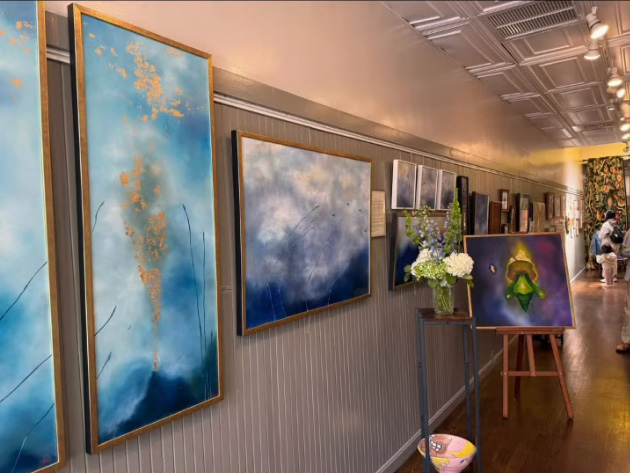
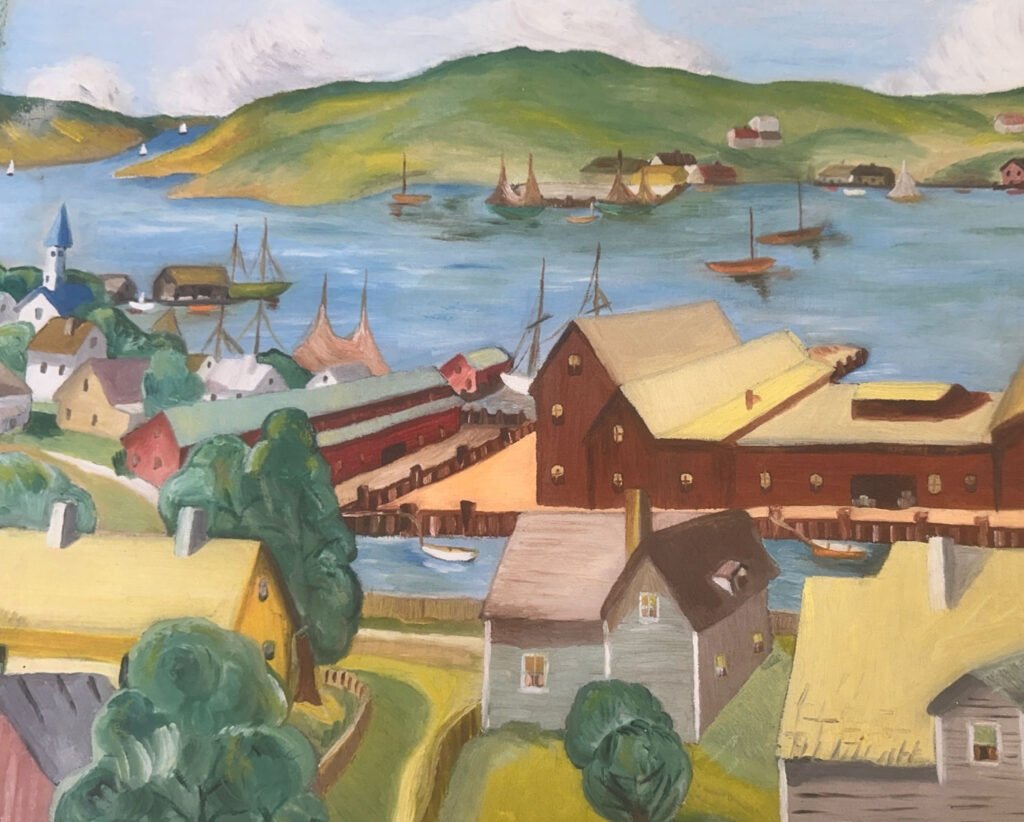
Primitive Landscape, 1958, Hawthorn Gallery, Belmont, MA
If I had to bet, I would wager most homes have at least one, if not more than one, landscape paintings. Landscapes are popular for many reasons. They often are depictions of places we grew up or perhaps vacationed. Serene pastoral landscapes can imbue our urban settings with peace and a sense of tranquility. Landscapes often provide a view into a past, perhaps a memory of the simpler time, real or imagined.
Origins of Landscape Painting
The roots of modern landscape painting can be traced to the Renaissance, a period marked by both a growing appreciation for the natural world and the development of mathematical perspective. These changes helped artists represent outdoor scenes with greater realism and depth.
We can thank our Dutch neighbors of the 16th century, who played a major role in popularizing the landscape genre. Not to criticize, but the Netherlands is not much to look at, by that I mean there is a sameness to much of the low lying land. And it’s flat, I mean really really flat. Despite the lack of natural drama, scenes of nature pervade among the Durch artists. As Protestantism spread, there was less demand for sacred imagery, which opened the door for other subjects to gain prominence. As artistic tastes shifted away from strictly religious themes, landscapes became increasingly popular.
Do the Math
Like many an art student I’m sure their math tutors heard these burgeoning artists complain that “We are going to be painters —why do I need math?!” Turns out they needed a lot of math. Modern Landscapes owe their ability to the strict mathematical tool to establish focal points. The Vanishing Point is defined as the point where receding parallel lines appear to converge. Like foreshortening in portrait paintings, the vanishing points convinces the eye that landscape rending exits in three dimensions, not two. Look at Da Vinci’s Mona Lisa again, look past the figure and focus on the background. He created a vanishing point that draws the viewer’s eyes directly to the center of the painting, just exactly where the master wants you to view the figure.
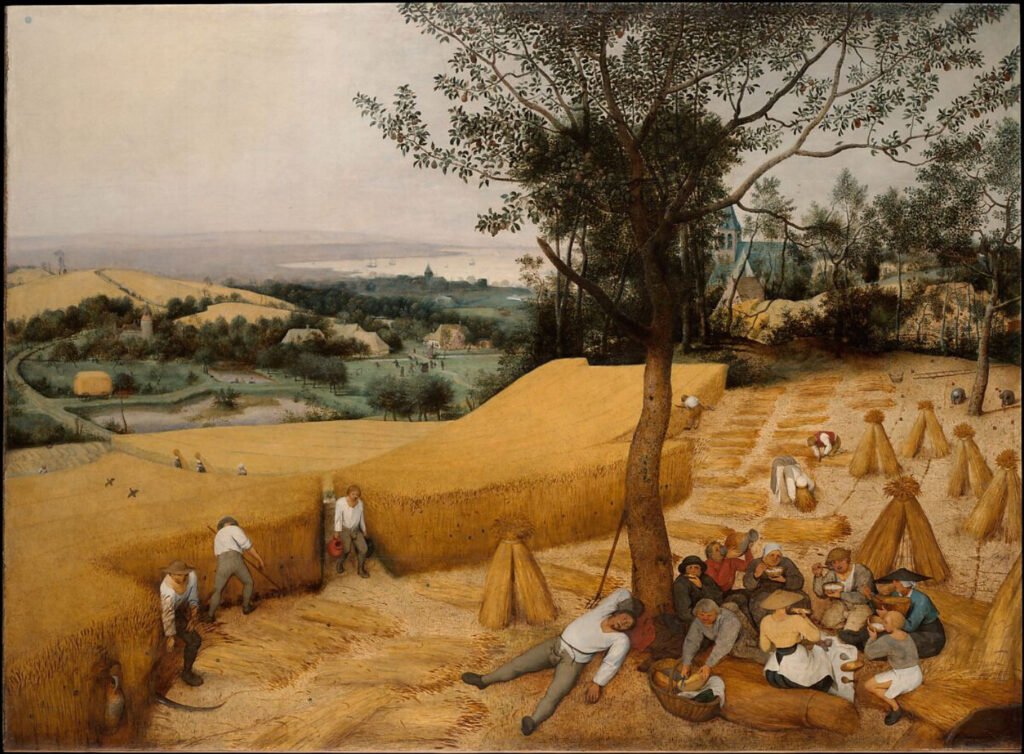
The harvesters is an example of how the vanishing point in landscape painting works. Painted in 1565 by Bruegel the Elder, the scene depicts an unvarnished day in the life of the working famer. The action, or inaction in the case of the resting exhausted peasants, is the dramatic landscape featuring golden wheat fields, distant buildings and even ships in the harbor. Look closely at all the lines in the painting: the rows of the wheat, the bending road, the path the workers have cut. Nothing is there by accident. The lines draw create the sense of depth. The larger objects appear closer to the viewer, the smaller ones seem further away,
Math and art at work, who knew?
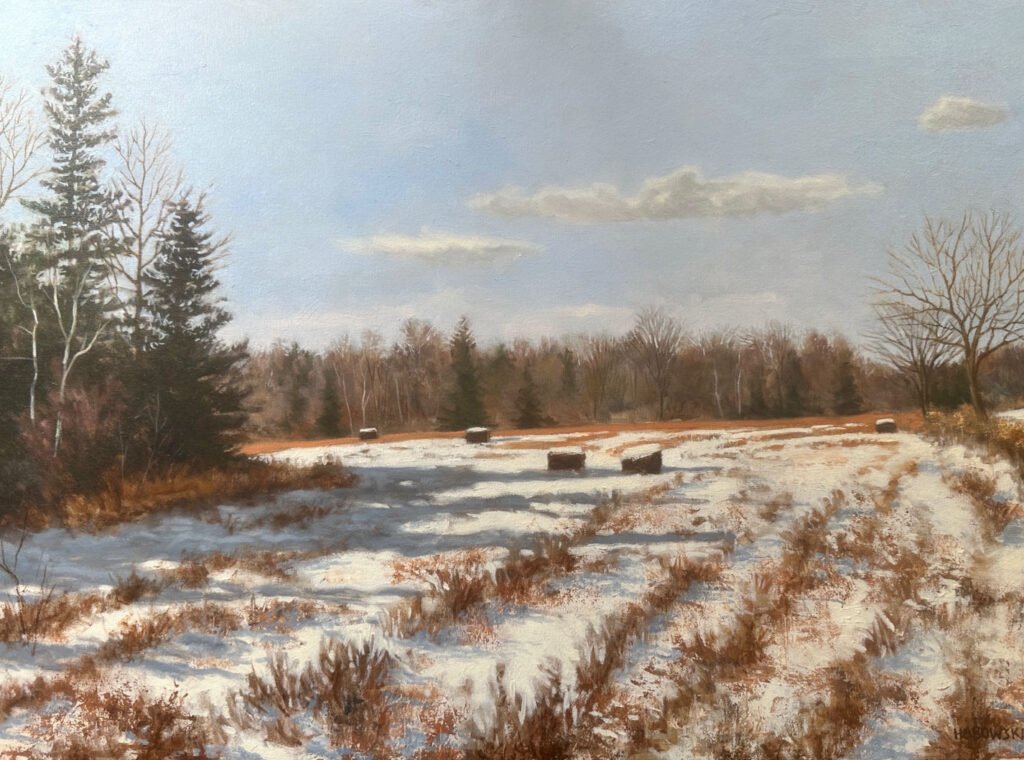
Later this summer the Hawthorn Gallery is pleased to be offering a show dedicated to the Landscape Genre. I am pleased to be able to show unique landscapes by Maine artist Bruce Habowski. He brings his unique perspective to objects that often go unseen. In both urban and pastoral settings Bruce’s work is sure to please the eye and also challenge . He has exhibited widely in Maine and Ohio. You may catch one his tutorials on Youtube.
One of the most important reasons why I began the Hawthorn Gallery was to promote emerging artists. I am thrilled to be including a talented artist Dan Foran in the July Landscape show. I discovered Dan during a First Friday Open Studio in SOWA in 2026. He is revising the art of pointillism in his extraordinary urban landscapes. He brings a sense of whimsy to his urban-scape of Harrison Ave in Boston. Quite frankly Harrison Ave’s never looked as good as depicted in Dan’s
painting.